Fisherman's Bastion on Castle Hill
Climb the terraces and towers for a panorama over the Danube, Margaret Island and Pest; the main façade runs about 140 m.
5.2k readers a month
 luxentravel

Hungary · Europe
Thermal baths, ruin bars and the Danube at night.
In pictures
Experiences
Climb the terraces and towers for a panorama over the Danube, Margaret Island and Pest; the main façade runs about 140 m.

Soak in the Neo-Baroque thermal bath in City Park, a complex of 3 outdoor and 15 indoor pools; go early to avoid the crowds.

Browse the largest and oldest indoor market in Budapest for paprika, Tokaji wine and kolbász sausage, which tourists favour.

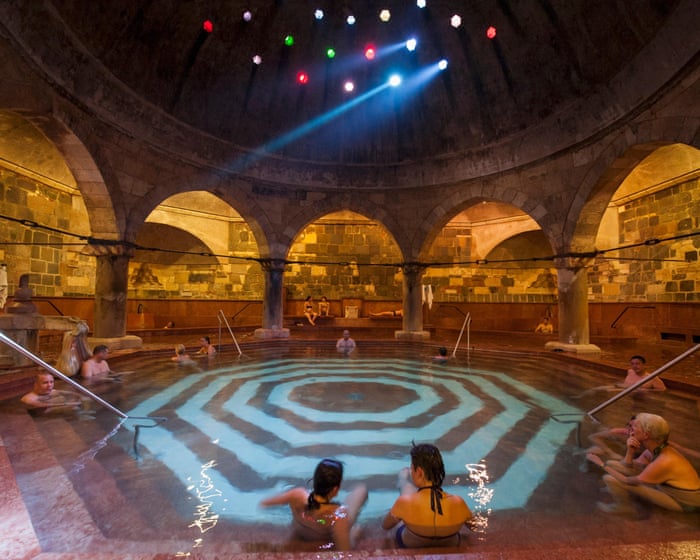
Bathe in the octagonal pool under the Ottoman dome at Rudas, founded in 1571 or 1572 and still keeping key elements of a hammam.

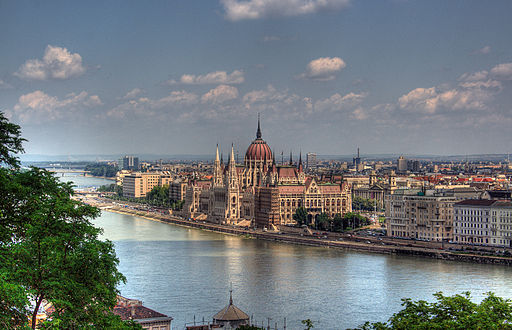
Take a guided tour of the Parliament on the Pest bank of the Danube; one of its two halls is kept for tours and ceremonies.

Have a drink at Szimpla Kert, widely seen as the pioneer of Budapest's ruin bars, in the Jewish Quarter of the seventh district.
Executive Summary: Budapest (Hungary) is at its prime during Apr–May, Sep–Oct. Characterized by city after dark, old-world romance, reset & restore, it ranks #56 on the Luxe score and is best suited for just me and the group chat and the two of us planning a a long weekend journey.
Grand cafés and steaming baths on both banks of the Danube. December brings Christmas markets.
Scored across structured editorial rubrics from our notes on Budapest. How we score →
Data from Nomads.com, fetched October 1, 2026. Costs are Nomads.com estimates for a long stay, not a hotel holiday.
At its best Still lovely Off season
Your Luxentravel trip
Three days of grand cafés, steaming thermal baths and evenings on the Danube, moving between Buda's castle hill and the boulevards and ruin bars of Pest.
Walk up to Buda Castle, then explore Matthias Church and the turrets of Fisherman's Bastion with views over the river.
Cross the Chain Bridge to Pest for coffee and cake in one of the city's grand cafés.
Take a Danube cruise at dusk as Parliament and the bridges light up.
Insider pick: Gundel, Városliget (City Park) · ★ 4.5 · $$$$
Spend a long morning at the Széchenyi Baths in City Park, soaking in the yellow neo-Baroque outdoor pools.
Walk down Andrássy Avenue past the Hungarian State Opera to St. Stephen's Basilica.
Dinner in the Jewish Quarter, then drinks in the ruin bars of the Seventh District.
Insider pick: Borkonyha Winekitchen, Belváros-Lipótváros (Sas utca) · ★ 4.6 · $$$
Tour the Hungarian Parliament Building, then visit the Shoes on the Danube Bank memorial nearby.
Browse the Great Market Hall for paprika and pastries, then soak in the Ottoman-era Rudas Baths and its rooftop pool.
A final dinner with Hungarian wine and a walk along the illuminated embankment.
Insider pick: Szimpla Kert, Erzsébetváros (Kazinczy utca) · ★ 4.6 · $
Make it five days: Add a day trip to the Danube Bend towns of Szentendre and Visegrád, and a slow day on Margaret Island.
The Belváros or the streets near the Chain Bridge on the Pest side, close to the river and the sights.
Insider pick: Four Seasons Hotel Gresham Palace, Belváros-Lipótváros (facing the Chain Bridge) · ★ 4.7 · $$$$
Bring flip-flops and a towel to the baths, and go early in the morning, when the steam rises and the pools are calm.
Best Apr–May, Sep–Oct; still lovely Jun, Dec.
Insider picks from HelpTravel (4.5★+ from 1,000+ Google reviewers). The itinerary is our own.
Where to stay
Hotels we'd book, picked for setting and character in different parts of town. Rooms and rates come straight from each hotel.
Széchenyi István tér, by the Chain Bridge
An Art Nouveau palace finished in 1906, with peacock-motif iron gates and a lobby of more than two million mosaic tiles; the Danube is outside.
Váci utca, Belváros40k
A Luxury Collection hotel in one of the most recognisable buildings on Budapest's skyline; its site presents the hotel as the return of an icon.
Next to St. Stephen's Basilica15k
A music-themed boutique hotel beside St. Stephen's Basilica, with suites named for operas and a year-round roof garden with 360-degree city views.
Petőfi Sándor utca, Belváros
A hotel in Hungary's first modern commercial building, from 1817, a few minutes from the Danube; it has 110 rooms and has operated as a hotel since 2019.
Each hotel's details were checked on its own website (October 2026). These are plain links: we earn nothing when you book.
Make it happen
Live from travel partners when you ask: real fares, a walk through the city, guided trips and ferries. You book with them directly.
Seen lately
A long walk you can take from the sofa, and recent posts from official tourism and hotel accounts.

Walk it · 1 h 20 min
Budapest Walker on YouTube · plays from youtube-nocookie.com when you press play
Instagram posts are shown with Instagram's own embed and stay on Instagram; the accounts are official tourism, park or hotel accounts.
The insider's edit
Thermal baths, ruin bars, and Danube-split grandeur. Every pick holds a 4.5-star average from at least 1,000 reviewers, with one tip from someone who's been.
Belváros-Lipótváros (facing the Chain Bridge)
A 1906 Art Nouveau insurance palace facing the Chain Bridge, restored down to its Zsolnay tiles, peacock-gate ironwork and mosaic floors. Danube rooms frame Buda Castle dead-on.
Splurge on a river-view room, or at least take a drink in the lobby bar to soak up the glass-roofed atrium.
Erzsébetváros (Grand Boulevard)
Opened in 1896 as the Grand Hotel Royal, with a ballroom-grand lobby and a beautifully restored century-old Royal Spa pool below. Its mirrored corridors are often cited among the inspirations for 'The Grand Budapest Hotel'.
Swim in the historic Royal Spa pool before 10am, when guests have it nearly to themselves.
Belváros-Lipótváros (behind St. Stephen's Basilica)
A music-themed boutique behind the Basilica with four wings — classical, opera, jazz and contemporary — and a piano-key mosaic running through the lobby. The High Note SkyBar upstairs is a destination in itself.
Book a Basilica-facing room and reserve SkyBar seats the moment you check in — it fills nightly.
Belváros (Ferenciek tere)
A 1913 Moorish-Gothic shopping arcade reborn as a hotel, its hexagonal-tiled atrium one of Europe's most jaw-dropping interiors. Coffee under the stained-glass cupola is a Budapest event in itself.
Sit in the atrium café right at opening to photograph the cupola before the crowds arrive.
Erzsébetváros (Grand Boulevard)
An 1894 Italian-Renaissance palazzo built for the New York Life Insurance Company, whose gilded ground-floor café claims the 'most beautiful café in the world' title. The rooms upstairs are quietly contemporary by contrast.
Use your guest status to take breakfast in the New York Café before the public queue forms.
Terézváros (Andrássy út)
A beloved boutique in a restored 19th-century building on Andrássy Avenue, built around a sky-lit atrium with wrought-iron balconies. Location-for-money is among the best in the city.
Ask for an atrium-facing room to avoid street noise; the Opera House is four minutes' walk.
Curated by HelpTravel: the full hotels guide for Budapest → Ratings and review counts from Google Places, rounded down.
Városliget (City Park)
Feeding City Park since 1894 and namesake of the Gundel palacsinta — a walnut-rum crêpe flambéed in chocolate sauce. White-glove service and violin music keep the full old-world production alive.
Come for the gentler-priced lunch menu and have the palacsinta flambéed tableside.
Belváros-Lipótváros (Sas utca)
A Michelin-starred 'wine kitchen' pairing modern Hungarian plates — mangalica pork, foie gras — with a list of two hundred mostly Hungarian labels. Relaxed bistro energy despite the star.
Ask the sommelier to build a Furmint-led pairing and book about two weeks ahead for dinner.
Erzsébetváros (Grand Boulevard)
A gilded, twisted-column coffee palace from 1894; legend says writer Ferenc Molnár threw its key into the Danube on opening night so it could never close. The Dobos torte and live salon music make the queue bearable.
Go right at morning opening or reserve online — midday waits regularly hit an hour.
Erzsébetváros (Jewish Quarter)
A wood-and-brick spot doing the stew canon properly — goulash, chicken paprikash with nokedli dumplings, wild-boar pörkölt — at honest prices in the ruin-bar district. It is the local answer to 'where do I get real Hungarian food'.
Reserve even on weeknights — it is small and the paprikash can sell out.
Belváros-Lipótváros (near Parliament)
Checked tablecloths, house pálinka and grandmother-grade chicken paprikash two blocks from Parliament — the most-booked traditional table in the city. Portions are unapologetically huge.
Book online two to three weeks ahead and confirm your seating time — there are set turns.
Erzsébetváros (Jewish Quarter)
A ruin garden grown up: fairy lights, a glass roof and live trees over Middle Eastern plates — shakshuka, shawarma, charred eggplant — in the heart of District VII. The gentle gateway to ruin-bar culture.
Reserve for dinner since walk-ins queue; Sunday lunch gets the prettiest light through the glass roof.
Curated by HelpTravel: the full restaurants guide for Budapest → Ratings and review counts from Google Places, rounded down.
Erzsébetváros (Kazinczy utca)
The original ruin bar, opened in a derelict factory: graffiti strata, a gutted Trabant for seating, garden film screenings and a Sunday farmers' market. Every imitator worldwide traces back to this courtyard.
Come on a weeknight before 10pm to actually move around — or Sunday morning for the farmers' market version.
Erzsébetváros (Akácfa utca)
Two legendary ruin clubs merged into one labyrinth claiming a dozen-plus bars and multiple dance floors across a city block. Every room runs different music until sunrise.
Entry is usually free — arrive before midnight to skip the line and learn the layout while sober.
Belváros-Lipótváros (Aria Hotel rooftop)
A rooftop terrace nearly eye-level with St. Stephen's Basilica's dome — close enough to read the stonework — with a long list of spritzes and signatures. Blankets and heaters keep it open year-round.
Book a rail-side table online several days out for sunset.
Terézváros (Andrássy út)
A wraparound rooftop above the old Paris Department Store with a full-circle panorama of Pest's rooftops. In winter the terrace sprouts heated igloos; in summer DJs keep it lounge-loud.
In cold months reserve an igloo online — they sell out; in summer come at golden hour.
Belváros-Lipótváros (St. Stephen's Square)
Hungary's flagship young-winemaker bar, pouring a hundred-plus bottles — Furmint, Kékfrankos, Tokaji — on the square directly facing the Basilica. The terrace at dusk is prime people-watching.
Tell the staff two flavour notes you like and let them build you a three-glass Hungarian flight.
Belváros (opposite the Great Market Hall)
Every surface is buried under visitors' scribbled notes, peanut shells crunch underfoot and hay hangs from the rafters — and the kettle goulash is genuinely good. Chaotic, beloved and unchanged for decades.
Bring a pen to leave your own note, and come off-peak — the small room fills fast at dinner.
Curated by HelpTravel: the full bars guide for Budapest → Ratings and review counts from Google Places, rounded down.
Lipótváros (Kossuth tér)
Imre Steindl's 1902 neo-Gothic colossus stretches 268 metres along the Danube and houses the Holy Crown of St. Stephen beneath its 96-metre dome. Interior tours run when the National Assembly is not sitting.
Buy timed tickets online days ahead, then see the building again at night from the Buda bank or a river cruise.
Várkerület (Castle District)
A 1902 neo-Romanesque fantasy of seven turrets — one for each Magyar tribe — built purely for the view across the Danube to Parliament. It is the most photographed terrace in Hungary.
The lower terraces are free and always open — come before 8am for empty arches at sunrise.
Városliget (City Park)
One of Europe's largest medicinal bath complexes, opened in 1913: outdoor pools steaming against neo-baroque yellow facades while old men play chess on floating boards. Saturday-night 'sparties' add DJs and lights.
Buy a skip-the-line ticket with a private cabin online and go early morning, when locals soak.
Várkerület (Castle Hill)
The much-rebuilt royal palace crowning Castle Hill holds the Hungarian National Gallery and the Budapest History Museum, ringed by ramparts with Danube panoramas. The 1870 funicular creaks up from the Chain Bridge.
Ride the funicular up, then walk down through the Várkert Bazár garden terraces to the riverbank.
Belváros-Lipótváros
Budapest's largest church, capped at exactly 96 metres to match the Parliament, and home to the mummified right hand of King St. Stephen. The dome deck gives a 360-degree sweep over Pest.
Take the lift (or 364 steps) to the dome an hour before sunset, and check the schedule of evening organ concerts.
Erzsébetváros (Jewish Quarter)
Europe's largest synagogue (1859), a Moorish Revival landmark seating 3,000, with Imre Varga's steel weeping-willow Holocaust memorial in its courtyard. Theodor Herzl was born in the house next door.
Entry includes a guided tour — take it; closed Saturdays and Jewish holidays.
Curated by HelpTravel: the full sights guide for Budapest → Ratings and review counts from Google Places, rounded down.
Pair it with